
Why "Good Enough" Controls Are Killing Your Throughput: The Case for Integrated Line Control
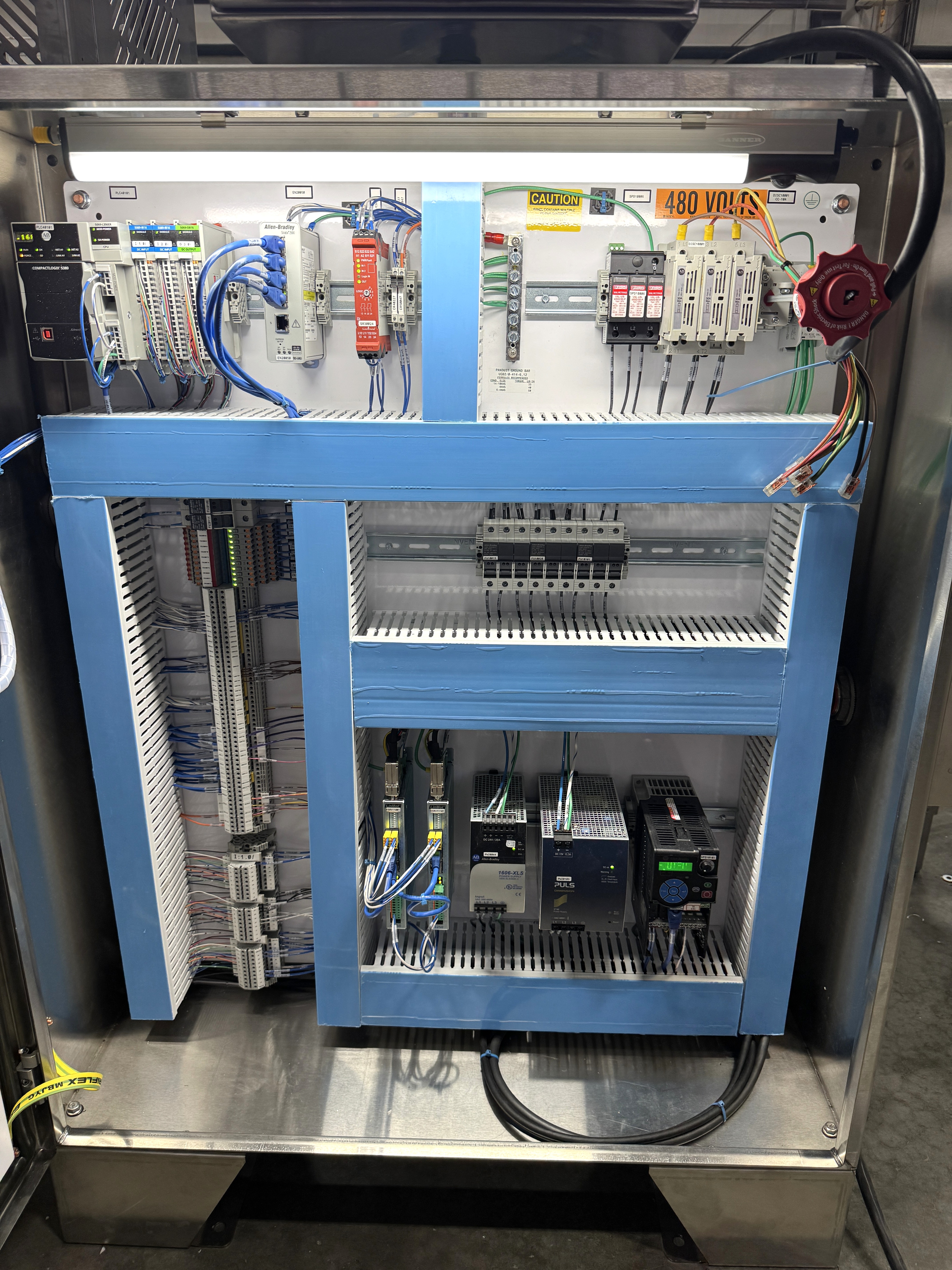 For high-speed manufacturing, simply moving a product from point A to point B isn't enough to stay competitive. True efficiency is found in how your conveyor line integration manages the brain of the operation - the control system. Many facility managers realize too late that suboptimal controls are the primary culprit behind missed production targets and frequent downtime.
As Ben Klubertanz, Senior Electrical Project Engineer at Nercon Conveyor Systems, puts it: "The plant-wide data network might be the brain, but the conveyor controls are the nervous system that ensures every physical movement is synchronized and purposeful." By prioritizing these sophisticated conveyor control systems, you can transform a disjointed series of machines into a high-performance, unified flow.
Moving vs. Flowing: Eliminating Hidden Friction
Many production bottlenecks aren't caused by mechanical failure, but by a communication breakdown between the hardware and the software. Moving is mechanical - a belt in motion. But flowing is the result of an intelligent Programmable Logic Controller (PLC) that anticipates changes in production speed. When controls are not precision-tuned, a "dumb" system simply stops when a problem occurs, often creating a chaotic mess of tipped bottles or excessive back pressure that damages product.
"Line stoppages will always happen," Ben explains. "The key to a successful line is being able to accommodate those stops with minimal waste and restarting in a timely fashion." By prioritizing an integrated approach, the system manages the density of the product on the belt, preventing the slugs of product or inefficient gaps that kill throughput. A smart system knows how to run and how to pause and recover without compromising the integrity of the line.
The High Cost of Generalist Integration
While a third-party integrator brings valuable broad-scope expertise to a project, they often prioritize a big-picture approach over the granular technical details that Nercon specializes in. Choosing an OEM partner with a focus on conveyor dynamics ensures your system is optimized for:
- Logic nuances. Ensuring programming accounts for specific product weights, surface friction, and center of gravity.
- Precision sensor placement. Preventing the false signals that cause a line to stutter or stop unnecessarily.
- Refined recovery logic. Designing the system to clear the line after a stoppage automatically, reducing the need for manual intervention.
"A broad-scope integrator might be convenient, but they often lack the deep, daily experience with specific equipment rates and product sizes," says Ben. "A generalist might know how to make a belt turn, but may have less experience with the nuances of how to recover the line after a stoppage without losing product or time." By choosing an OEM that lives and breathes conveyor dynamics, you ensure the logic is built to handle the realities of your floor.
How Integrated Controls Directly Boost Throughput
Maximizing conveyor throughput is about the intelligent management of the product journey. Integrated controls allow your line to act as a single, cohesive organism by:
- Eliminating the "start-stop" cycle. Using modulation to keep the line in constant motion.
- Intelligent buffering. Protecting upstream production from downstream pauses.
- Cross-machine synchronization. Ensuring the conveyor talks to fillers, labelers, and packers.
Precision Speed Modulation
A common killer of industrial automation efficiency is the "start-stop" cycle. Integrated controls utilize precision speed modulation to gradually ramp speeds up or down based on real-time demand. This avoids the jerky movements that tip products or cause mechanical wear, keeping the line in a state of constant, optimized motion while extending the life of your equipment.
Intelligent Accumulation and Buffering
Accumulation is a delicate balancing act that requires a deep understanding of mechanical limits. An automated line control strategy allows for intelligent buffering, creating a safety net that holds product when downstream machines are paused. This specialized logic ensures that once the bottleneck clears, the line is ready to resume full-speed operation immediately without a total system shutdown.
Seamless Equipment Communication
Your conveyor is the connective tissue between machinery like fillers, labelers, and packers. Integrated line control ensures the conveyor talks to this equipment, adjusting its behavior based on whether the filler is in startup or the packer is reaching capacity. Without this, machines work in silos, leading to backups and starved equipment that waste production time.
The OEM Advantage: Specialist Engineering
Choosing an Original Equipment Manufacturer (OEM) like Nercon Conveyor Systems for your controls means you are getting a system designed by engineers who live and breathe conveyor dynamics. This ensures that the electrical and mechanical components are optimized for one another.
Designing the Mechanical and Electrical in Tandem
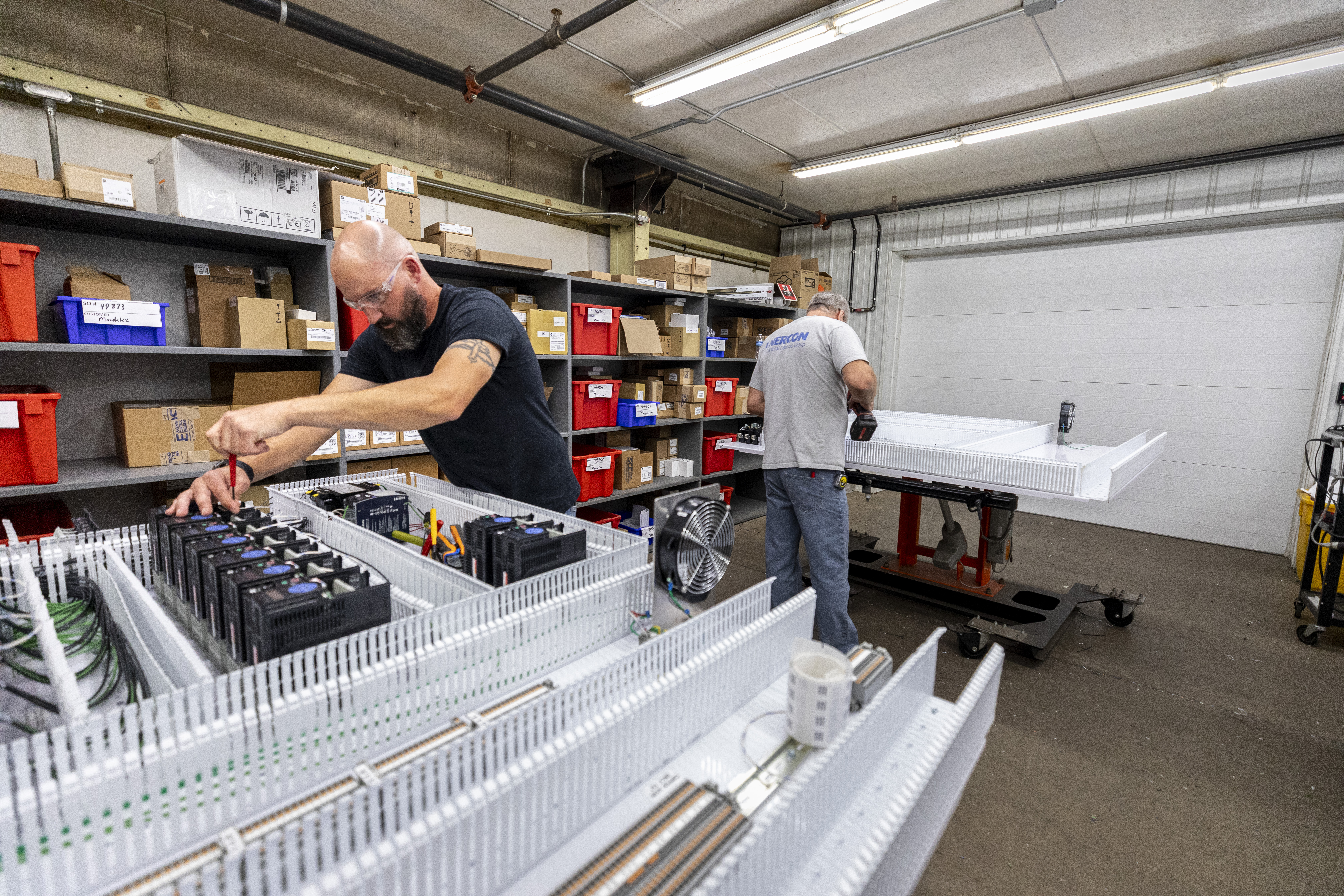
When you partner with an OEM that specializes in modular conveyor systems, the mechanical design and the control logic are developed simultaneously. This tandem approach means the placement of every sensor and the tuning of every Variable Frequency Drive (VFD) is informed by the physical constraints of the conveyor. We eliminate the “square peg, round hole” issues that arise when a third-party tries to overlay their logic onto our hardware.
In-House Testing: Solving Problems Early
One of the greatest risks of using a third-party is that the first time hardware and software actually meet is on your production floor. At Nercon Conveyor Systems, we eliminate this through extensive Factory Acceptance Testing (FAT). We hook the control panels to the actual machines in a temporary fashion right on our floor.
"By powering up the panels and equipment together in-house, we can identify wiring issues or mechanical misalignments that might have been missed in isolation," Ben explains. "Rectifying a logic bug here is a minor adjustment; catching it during startup at a customer's site can result in days of costly downtime."
Reliability and Maintenance
Reliability is built into the foundation of our systems, starting with our in-house control panel shop. Unlike many integrators, we build UL-listed control panels that meet the highest safety and quality standards.
When a program issue or sensor fault occurs, every minute of downtime is lost revenue. By integrating secure remote-access capabilities into our control systems, Nercon engineers can provide real-time diagnostics to troubleshoot your line from our facility. This allows our specialists to see exactly what the PLC is seeing, often solving complex programming or logic issues instantly without the need for an expensive, time-consuming on-site technician visit.
Conclusion: Investing in the Brain of Your System
Your conveyor line is only as capable as the controls that run it. While it may be tempting to treat integration as a secondary concern, investing in specialized OEM controls is the surest way to guarantee long-term throughput and reliability.
Ready to Optimize Your Line? Sustainable efficiency in high-speed manufacturing comes from integrated systems designed around your specific production goals and product requirements. Our team of experts is ready to help you assess your control needs and plan your integration strategy. Contact our team today or call 844-293-2814 to discover how our specialized engineering and integrated control solutions can keep your operations moving and your production targets on track.

Request A Quote
Looking for a solution designed specifically for your needs? Share the details of your project with us, and our team will create a customized quote tailored to your goals, budget, and requirements.