
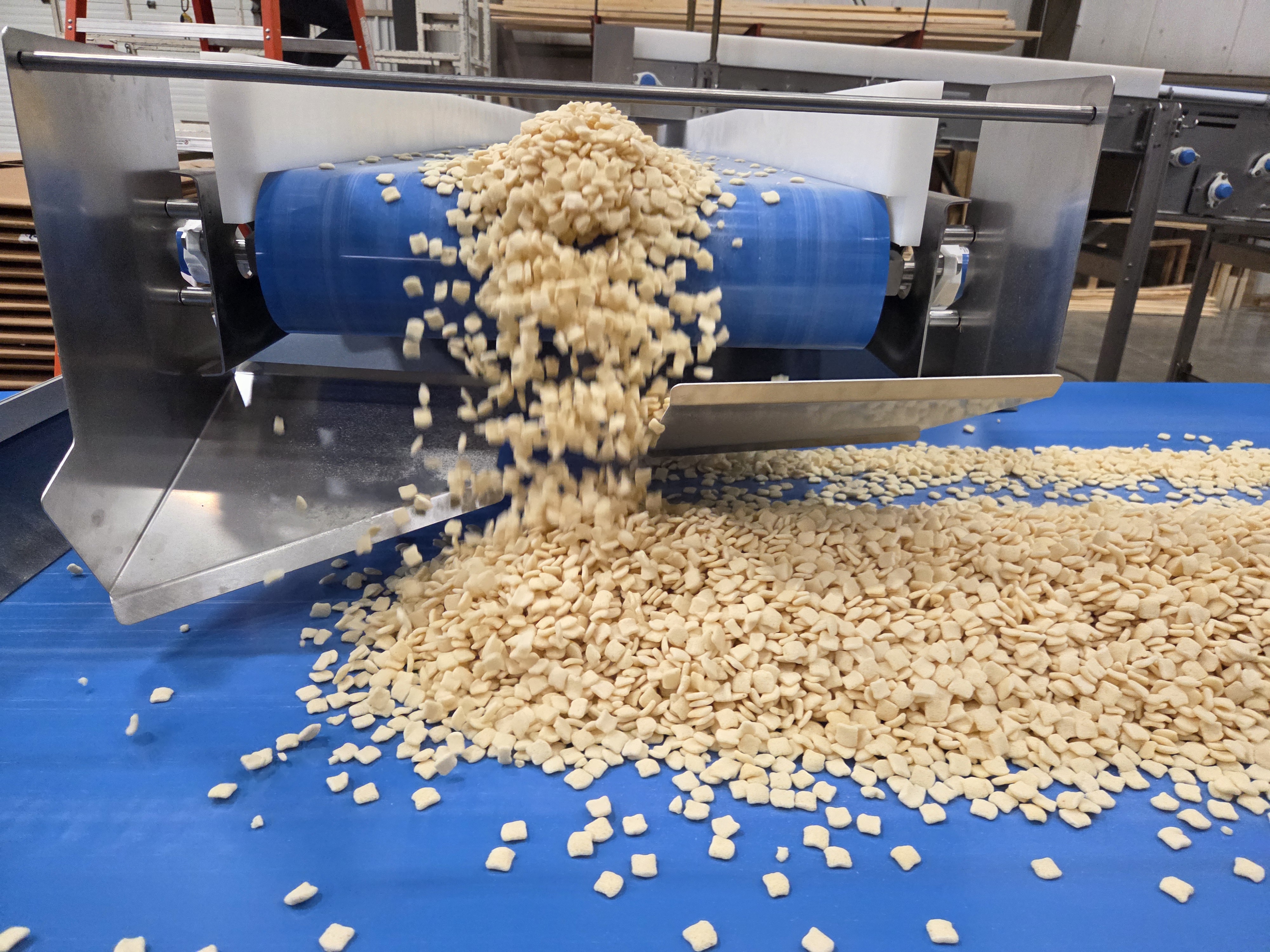
The Ultimate Guide to Sanitary Conveyor Design for Food & Beverage
Food and beverage processors operate under the tightest sanitation windows in manufacturing. Equipment that is difficult to clean creates a bottleneck that costs labor hours and increases the risk of microbial growth. High-performance food grade conveyors must withstand aggressive pressure washes and chemical sanitizers without surface degradation. Nercon builds every conveyor system to specific plant requirements to ensure the equipment supports, rather than complicates, your safety protocols. Continue reading for the engineering standards of sanitary conveyor design and how to select the right configuration for your facility.
Key Takeaways
- Equipment that is difficult to clean creates labor bottlenecks and increases the risk of microbial growth, meaning sanitary design and operational efficiency are directly connected
- FSMA and 3-A Sanitary Standards set the legal baseline, but the real goal is preventing a recall before it happens
- Truly hygienic conveyors are engineered to eliminate the spots where bacteria hide
- The choice between 304 and 316 stainless steel is based on product chemistry and cleaning regimen
- CIP and COP each have a place depending on your product risk level and available sanitation window
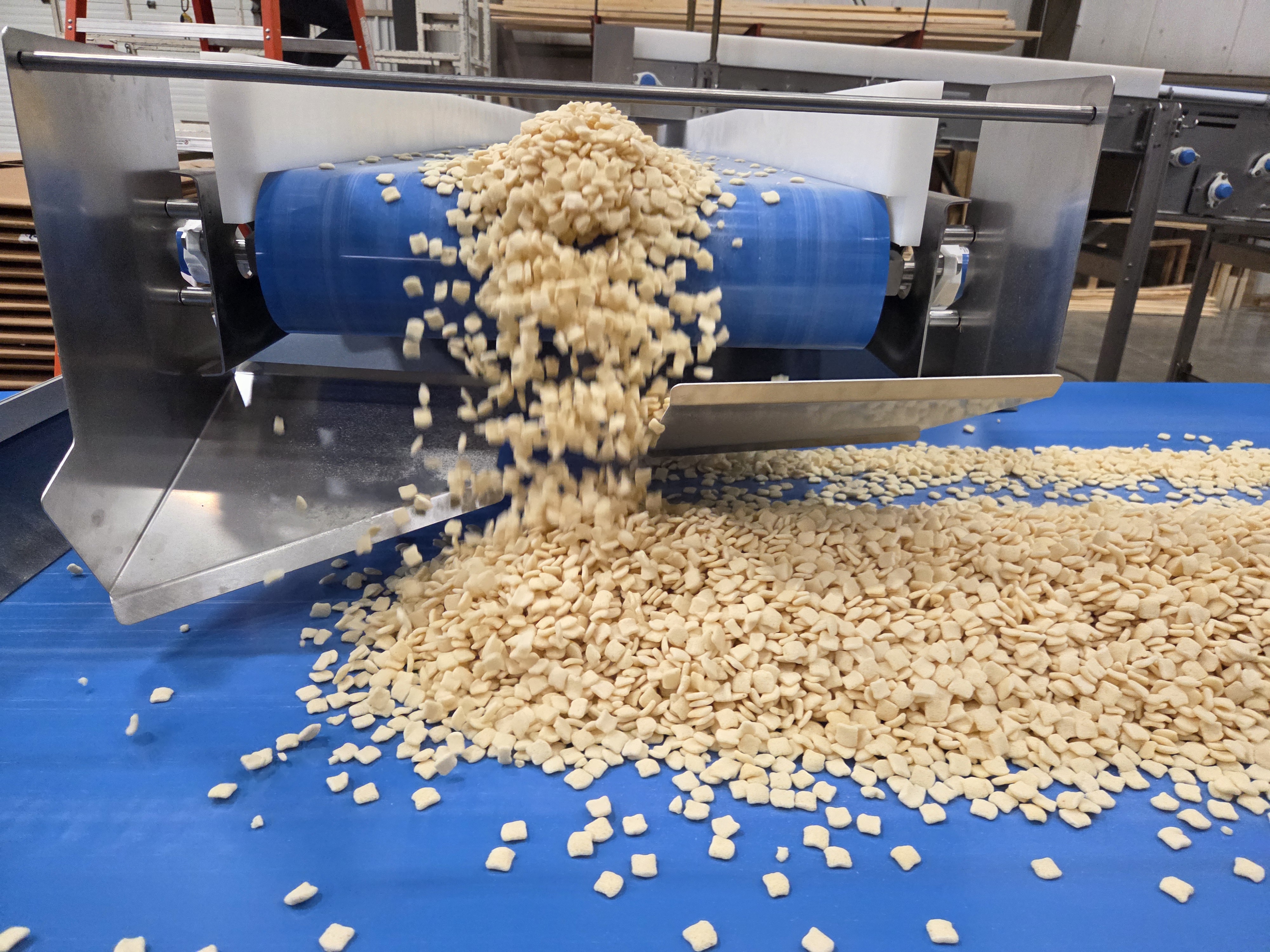
Engineering for Food Safety
Effective food safety starts with the geometry of the modular conveyor system. Dead spots where water or product collect allow bacteria like Listeria or Salmonella to colonize. A properly engineered sanitary conveyor design focuses on accessibility, allowing sanitation crews to reach the frame and belt. When hardware is designed for cleaning, you reduce the variables that lead to failed swabs and unexpected downtime.
Beyond FSMA Compliance: Brand Protection
The Food Safety Modernization Act (FSMA) shifted food safety in the U.S. to a preventive model. Now, manufacturers are now expected to identify and control contamination risks before an incident occurs. For conveyor systems, that means sanitary design is a documented requirement.
Similarly, 3-A Sanitary Standards provide equipment design criteria widely recognized across the dairy, food, and beverage industries, ensuring surfaces that contact product are resistant to bacteria buildup. Equipment that meets FSMA and 3-A standards is engineered from the ground up with hygiene in mind.
Meeting both USDA or FSMA standards is the legal baseline, but the real objective is preventing a recall. One contamination event can result in permanent damage to consumer trust and lost revenue. Using hygienic conveyor systems designed with smooth, non-porous surfaces and minimal overlapping joints provides a physical barrier against contamination. Investing in sanitation at the design phase is the most cost-effective way to manage operational risk.
Key Features of a Truly Hygienic Conveyor
What makes a conveyor “sanitary”? It comes down to how quickly and effectively it can be returned to a sterile state. Nercon builds systems to eliminate the spots where bacteria hide:
Minimal Horizontal Surfaces & Shedding Designs
Horizontal surfaces allow liquids and debris to pool. Nercon’s sanitary frames utilize angled (minimum 45°) or rounded surfaces that use gravity to direct water and product remnants to the floor. By eliminating flat cross-members and using open-frame construction, cleaning agents flow freely through the system without leaving stagnant residue.
Toolless Disassembly for Faster Cleaning
The time required to strip a conveyor for cleaning directly impacts labor costs and throughput. Nercon’s food-grade conveyors feature quick-release, take-up handles on both sides. This allows one person to release the belt and disassemble the line for COP (Clean-Out-of-Place) in minutes without specialized tools. To ensure fast reassembly, Nercon uses unique identifiers on removable parts to match the numbers marked on the conveyor.
Choosing between CIP and COP depends on your product risk and your available sanitation window. While COP offers the most thorough visual inspection for high-risk proteins, CIP offers a repeatable, automated cycle that significantly reduces manual labor.
Eliminating Bacteria Harbors
Pathogens thrive in the microscopic gaps found in bolted joints or pitted welds. Nercon’s HydroCore® line focuses on:
- No tubular components. Elimination of tubular parts that can harbor internal moisture and bacteria through microscopic pit holes.
- Continuous welds. All joints are ground smooth to prevent overlaps and crevices.
Stand-off spacers. Components are mounted away from the frame to allow 360-degree cleaning access.
Surface Finish and Ra Values
Design geometry gets bacteria out of the frame, but surface finish determines whether bacteria can take hold on the metal itself. Ra, or roughness average is the standard measurement used to quantify how smooth a surface is at the microscopic level. The lower the Ra value, the smoother the surface and the fewer microscopic peaks and valleys where bacteria can shelter from cleaning chemicals and mechanical action.
A surface that looks clean to the eye can still harbor pathogens if the finish is too rough, which is why Ra values are a requirement when evaluating conveyor equipment. Nercon specifies surface finishes to match your product risk level, ensuring that every product contact surface meets the standard your facility requires.
Selecting the Right Material: 304 vs. 316 Stainless Steel
While stainless steel is the standard for non-porous surfaces, your product chemistry and cleaning regimen dictate the specific grade required. Using the wrong alloy leads to pitting - microscopic holes that act as bunkers for bacteria. 304 and 316 are frequently the best stainless steel choices for food manufacturing, so it’s important to understand which is best for your needs.
- Grade 304: The industry workhorse. It offers excellent resistance to standard oxidation and handles most washdown chemicals. It is the standard choice for dry goods and general packaging.
- Grade 316: The necessary upgrade for high-salt (cheese/snacks), high-acid, or caustic environments. The defining difference is the addition of molybdenum, an alloying element that provides superior protection against chloride-induced pitting. This is particularly critical for sanitary dairy product lines where brine and acidic cleaners are common.
Investing in the correct grade ensures your equipment maintains a smooth, hygienic surface over years of aggressive sanitation.
Popular Sanitary Conveyor Types
Selecting a sanitary conveyor requires matching the belt technology to the product’s physical state.
Blue Belt
The gold standard for raw proteins and direct food contact. These monolithic belts eliminate the hinges and pins found in modular chains, removing bacteria harbor points and preventing product loss or fluid migration through the belt.
Mat Top (Modular Plastic)
Modular plastic belt conveyors are durable and versatile for packaged goods. When configured with high open-area styles, these belts allow for superior drainage and impact resistance in washdown environments.
Wire Mesh
Used for extreme temperatures, such as breading, battering, or cooling lines where air and liquid must flow through the belt.
Table Top and Transfer
For high-speed bottling or small container lines, a sanitary table top conveyor provides the necessary stability for upright product movement. These systems often require precision conveyor transfers (like side-to-side or nose-bar transfers) to move product between modules without losing orientation or causing tipping that leads to spills.
The Nercon Difference: Engineering for Profitability
We don't just build for cleanliness - we build for the bottom line. Every design choice, from the “no-tools” teardown to the elimination of tubular frames, is intended to help clients move faster with fewer repairs and less time between product changeovers.
By testing every component beyond standard limits, we ensure your conveyor remains a high-margin asset. Whether your facility requires the deep-clean access of a standalone low profile belt conveyor or a fully integrated conveyor system, our engineering is focused on maximizing your uptime and protecting your profit margins.
Sanitary design is a fundamental component of your facility’s uptime. By selecting equipment engineered for fast, effective cleaning, you minimize the risk of human error in your sanitation process. Because sanitation needs vary, Nercon offers multiple construction levels - from Level I for packaged goods to Level III for raw, high-risk proteins - allowing you to pay for the protection you need without over-engineering. Nercon’s commitment to building to specific plant requirements ensures your conveyors match your products and cleaning protocols perfectly.

Request A Quote
Looking for a solution designed specifically for your needs? Share the details of your project with us, and our team will create a customized quote tailored to your goals, budget, and requirements.