
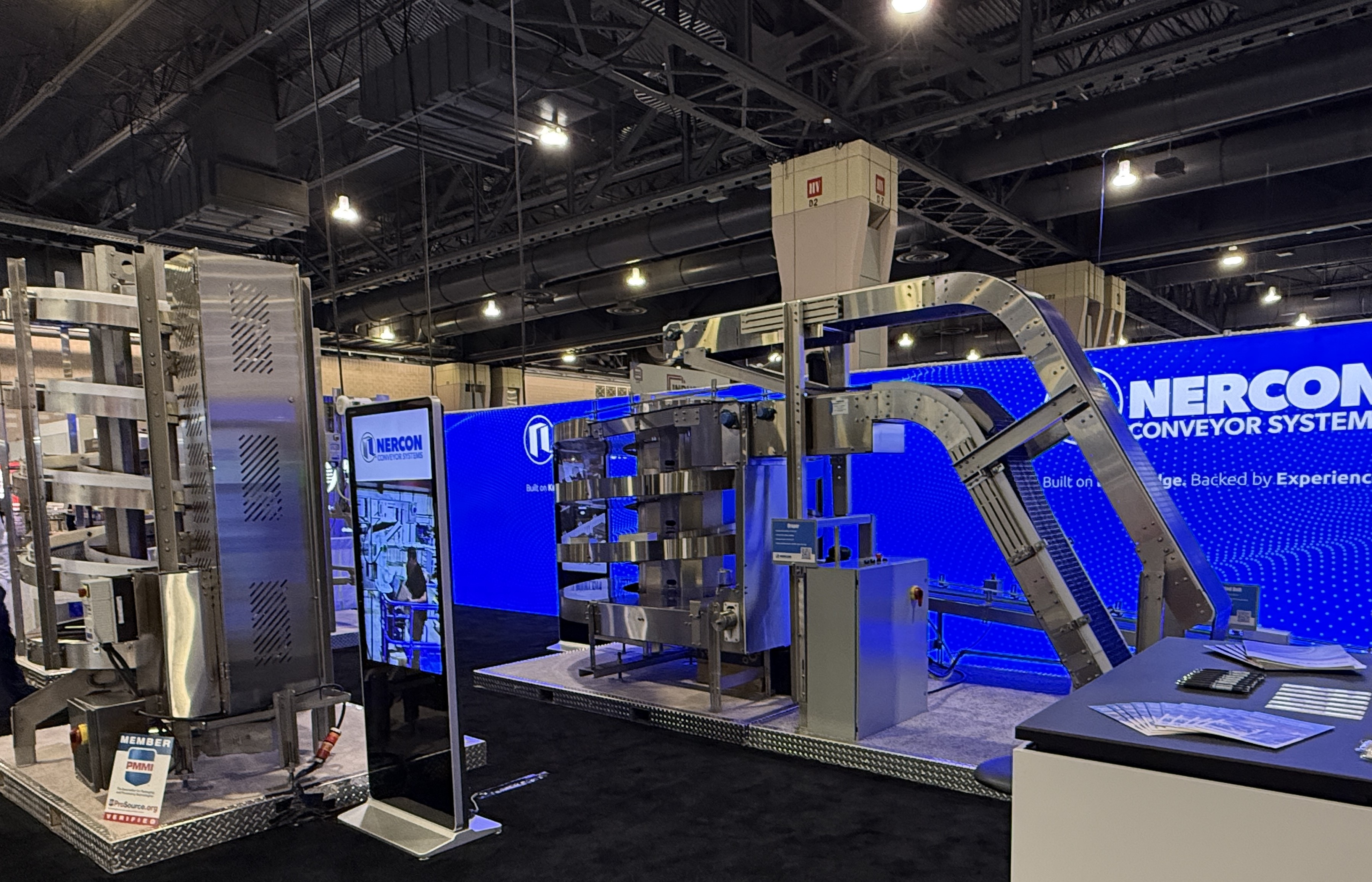
CIP vs. COP: Which Cleaning Method is Right for Your Production Line?
Sure, choosing a sanitation strategy is about safety - but it’s also a decision that dictates your daily uptime and long-term labor costs. In high-volume food and beverage facilities, the debate typically settles between two methods: Clean-in-Place (CIP) and Clean-out-of-Place (COP).
While the goal for both is a sterile environment, the mechanical requirements for the conveyor system are vastly different. Continue reading to understand the trade-offs between CIP and COP and how equipment design dictates your cleaning efficiency.
Understanding the Basics:
What is Clean-in-Place (CIP)?
A CIP system is an automated cleaning process in which equipment is sanitized without being disassembled. This is typically achieved through integrated spray bars, nozzles, and pump systems that circulate water and chemicals through the conveyor's internal components. CIP is the standard for complex modular conveyor systems like Washdown Spirals, where manual scrubbing of every tier would be physically impossible or too slow.
What is Clean-out-of-Place (COP)?
COP is a manual cleaning process that requires parts of the conveyor, such as belts, wear strips, and guide rails, to be removed and cleaned separately, often in a specialized COP tank or wash station. This method relies on mechanical action (scrubbing) and visual inspection to ensure all organic matter is removed from the frame and components.
Comparing the Two: Efficiency, Cost, and Labor
|
|
|
|
|
|
|
|
|
|
|
|
|
|
|
|
|
|
|
|
Downtime Considerations: The CIP Advantage
The primary driver for CIP is the reduction of downtime. In plants running three shifts, the “sanitation window” is often less than four hours. An automated CIP system can run while the crew focuses on other areas of the plant, significantly increasing the production up-time of the line.
Automation becomes even more critical when managing surge capacity. For instance, integrated accumulation table conveyors are often the hardest to clean manually due to their large surface areas. By utilizing a rotary accumulation table designed with CIP spray bars, a facility can maintain its “buffer” zone during a shift change without a 2-hour manual teardown.
Why COP is Still Necessary
Despite the speed of automation, COP remains essential for high-risk products like ready-to-eat items or allergens. A manual teardown allows for a “line-of-sight” inspection that automated sprays might miss, especially in shadow areas blocked by brackets or sensors. COP ensures that every square inch of your system, such as a Sanitary Flat Belt Conveyor or meat grinder, is physically verified as clean.
How Equipment Design Dictates Your Cleaning Strategy
Your cleaning method is only as effective as the conveyor’s geometry. If you choose a COP strategy, the modular belt conveyor design must feature toolless disassembly to prevent labor costs from spiraling. If you opt for CIP, the frame must be designed with open-profile engineering to ensure that automated sprays can reach the internal wear strips and return rollers.
Designing for Washdown Environments
Nercon builds to specific plant requirements, meaning we provide a conveyor solution and a sanitation solution. For COP environments, Nercon utilizes lift-up rails and quick-release handles. For CIP environments, internal spray manifolds are integrated, which are strategically positioned to eliminate bacteria harbors without wasting water.
Nercon’s HydroCore® Line Supports Both CIP and COP Cleaning Methods
HydroCore® conveyors are designed with easily removed chains, guide rails and wear strips without the need for tools to aid operators and clean-up personnel who have to dismantle the conveyor equipment for maintenance or cleaning. The entire modular conveyor system is fully wash-down capable for easy daily clean-in-place routines and completely disassembles for rigorous clean-out-of-place sanitation practices and reassembles quickly for fast start-up time.
Because it eliminates tubular components and uses an open-frame design, it provides the “line-of-sight” access required for thorough manual COP while offering the unobstructed paths necessary for effective automated CIP spray coverage.
For industries with high-frequency washdowns, such as sanitary dairy processing, finding the right balance between automated and manual cleaning is the key to sustained profitability. The most efficient production lines often utilize a hybrid approach: automated CIP for the main belt runs and manual COP for high-contact components like guide rails or specialty attachments.

Request A Quote
Looking for a solution designed specifically for your needs? Share the details of your project with us, and our team will create a customized quote tailored to your goals, budget, and requirements.