
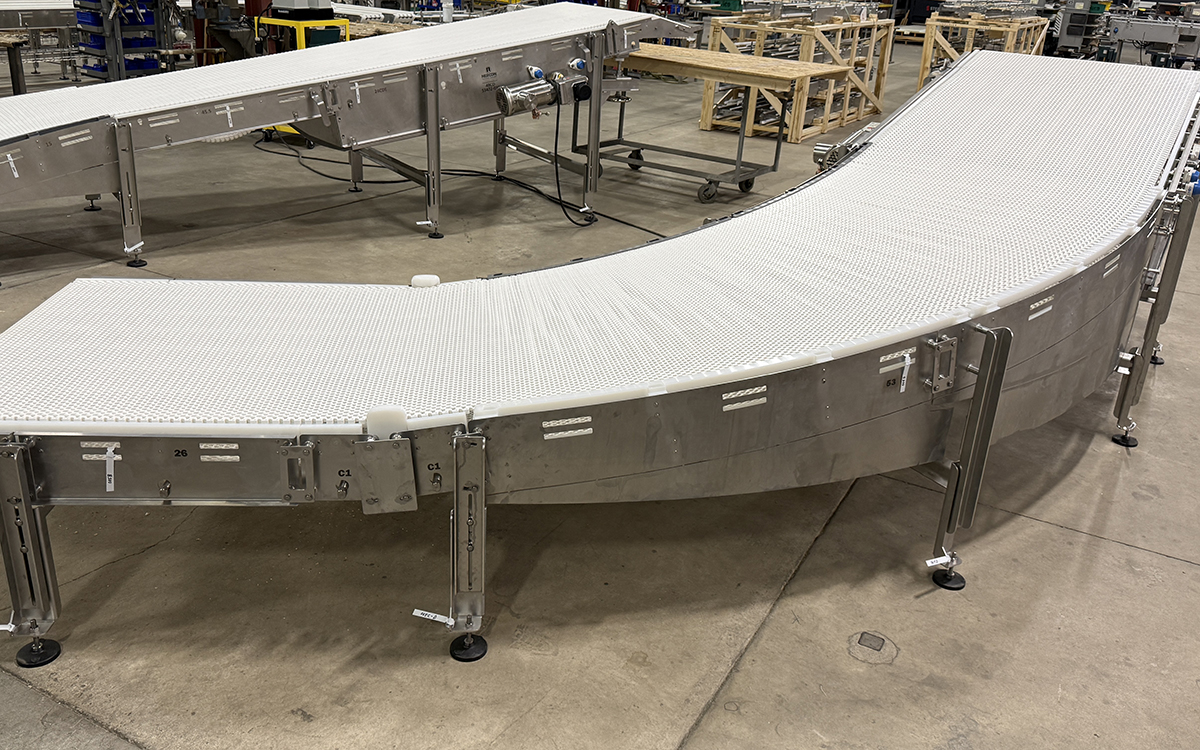
Learn which frame design is best for eliminating harborage points
Tube vs. Angle Frame Design
Your conveyor frame is the backbone of your entire material handling system. While it obviously provides essential structural support, the geometry of that frame plays a huge role in product safety. If your structural design is wrong, it quickly creates a hiding place for bacteria instead of safeguarding your line. When it comes to the sanitary design of food processing equipment, the primary engineering choice comes down to frame geometry: Tube vs. Angle.
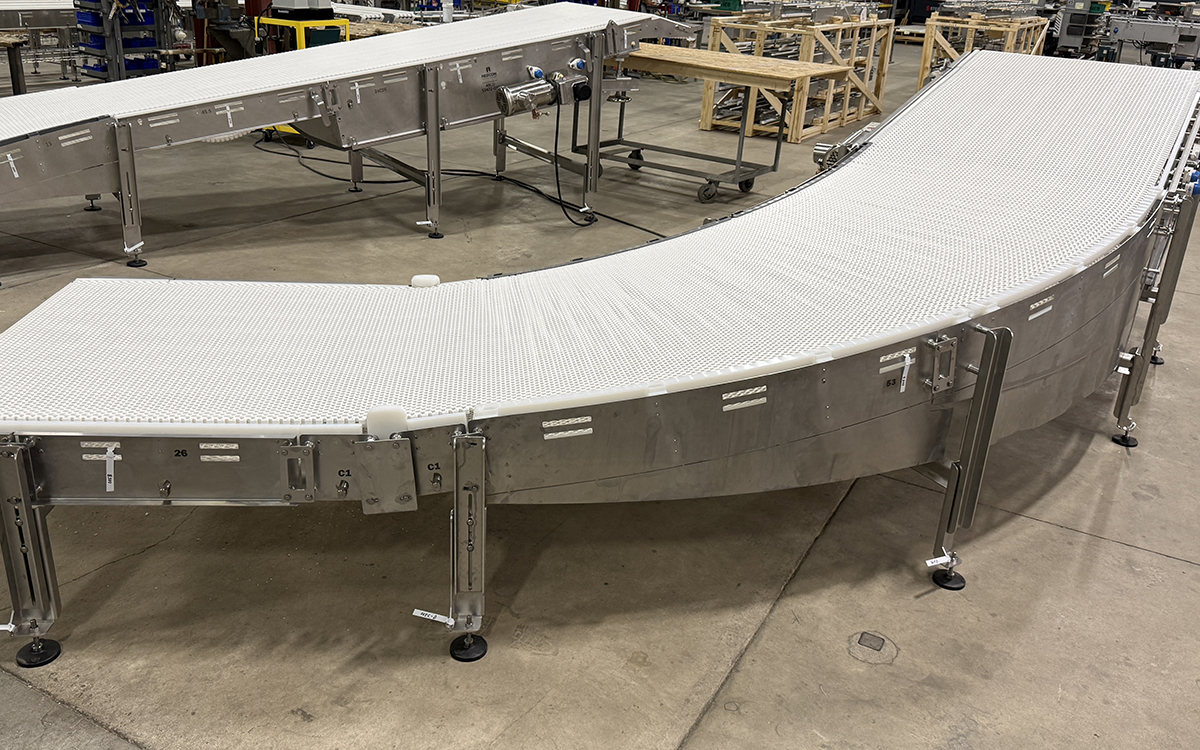
The Foundation of Hygiene: Why Frame Geometry Matters
Frame geometry dictates exactly how water, chemical runoff and debris interact with your equipment. In a high-intensity washdown environment, such as raw poultry processing or dairy packaging, every horizontal surface and enclosed space represents a potential failure point. Choosing the right frame balances structural rigidity with the strict cleanability required by your specific product. After all, sanitary conveyors must be engineered to prevent bacterial growth while enduring daily high-pressure sanitation cycles.
The Hidden Risks of Hollow Tubing and Internal Contamination
Tubular frames are popular for their strength-to-weight ratio and sleek look. BUT! - they carry a hidden risk: internal oxidation.
- The problem. If a square or round tube isn't 100% hermetically sealed (meaning completely airtight and watertight), moisture and cleaning chemicals can seep into the hollow center. Once inside, bacteria can grow undetected. It’s like when your kid brings a non-bath toy into the bath. It fills with water where it shouldn’t, moisture lingers, and before you know it, the head of little Johnny’s Spider-Man action figure is filled with mold. You don’t want that for Spidey, and you don’t want that for your sanitary conveyor design.
- The bleed risk. Over time, these hollow sections can develop pinhole leaks in the welds, allowing contaminated liquid to bleed onto the production line.
The Case for Open Angle Frames: Visibility is Key
Angle frames (specifically inverted angle frames) are often the preferred choice for high-risk food environments.
- Total Visibility: There are no hollow blind spots. Every inch of the frame can be inspected by a flashlight and a swab.
- Self-Draining Surfaces: By inverting the angle, we ensure that water and debris naturally shed off the frame rather than pooling on flat surfaces.
Eliminating Harborage Points with 100% Continuous Welds
Regardless of the frame shape, the true engineering value lies in the welding and assembly. At Nercon, we design our high-level sanitary systems with 100% continuous welds ground smooth, completely eliminating overlapping joints and stitch welds where organic material accumulates. Furthermore, by prioritizing tool-less disassembly and removing unnecessary mechanical fasteners from the washdown zone, we ensure there are no tiny threads or bolted crevices left behind to harbor bacteria.
When to Choose Tubular Frames: Strength and Aesthetics
Tubular frames aren't “bad” - they just require more discipline. They are often ideal for dry-room environments or heavy-duty packaging lines where high-impact strength is a must-have.
Best Practices for Sealing
If you do choose tubular frames for an extreme washdown environment, ensuring a flawless seal requires an immense amount of precision. At Nercon, our Sanitary Level III tube frames undergo extensive labor where every single opening is completely plugged, welded 360 degrees, ground smooth, and polished. This meticulous craftsmanship ensures that the hollow center stays truly isolated and sealed away from moisture, preventing the formation of hidden bacteria caves.
Matching Your Frame Design to Your Washdown Intensity
Your frame choice should follow your Sanitation Standard Operating Procedures (SSOPs). In high-intensity raw protein environments that use high-pressure hot water and caustic chemicals, the inverted angle frame is the standard. These areas demand 100% visibility for inspections. The risk is often too high to trust a sealed hollow tube.
In medium-intensity or Ready-to-Eat (RTE) zones where washdowns are controlled, tubular frames are often acceptable because lower water pressure is less likely to penetrate microscopic weld gaps. For dry-room secondary packaging, the rigidity of a tube frame is ideal. Without introduced moisture, the risk of internal oxidation is eliminated, allowing you to prioritize structural strength.
Understanding the Cost Difference: Material vs. Labor
When comparing angle and tube frame designs, look beyond just the price of steel.
- Angle frames often use more material but require less labor to seal.
- Tube frames might be lighter, but the labor cost to properly seal every joint and plug every end-cap correctly can be significantly higher.
Making the Right Structural Choice
There is no one-size-fits-all in sanitary conveyor design. The right choice depends on your washdown intensity, your cleaning chemicals and your auditing requirements. Whether it’s the total visibility of an angle frame or the structural power of a tube, Nercon builds based on the reality of your shop floor.
Nercon is a Wisconsin-based manufacturer of conveyor systems and material handling equipment. With 50 years of engineering experience, Nercon provides high-speed sanitary and industrial solutions, from standalone units to full-line integrations, for the food and beverage industries. All equipment is designed and fabricated in the USA, focusing on durability and ease of maintenance for high-volume production environments.

Request A Quote
Looking for a solution designed specifically for your needs? Share the details of your project with us, and our team will create a customized quote tailored to your goals, budget, and requirements.