
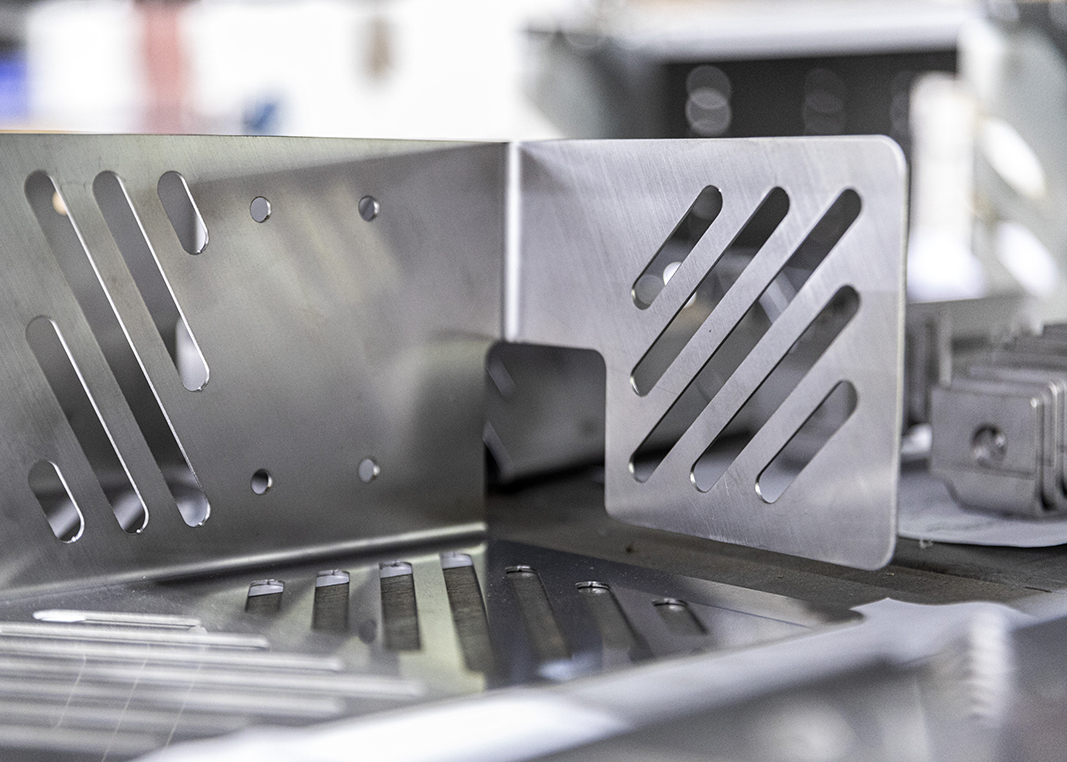
Why “Shiny” Doesn’t Always Mean “Sanitary”
Understanding Ra Values and Surface Finish for Food Safety
We have all been there during a post-sanitation walkthrough: the lights are bright and the conveyor looks like a mirror. You’d swear you could eat off it. But in the world of high-stakes food safety, “looks clean” is a dangerous phrase. True safety isn’t decided by what the naked eye sees; it’s decided at the microscopic level where the real troublemakers hide.
A standard mill finish can harbor microscopic laps and folds created during the rolling process at the steel mill. To bridge the gap between looking clean and being clean, manufacturers must focus on the specific material composition and texture of the steel. This is where the choice between 304 vs. 316 stainless steel becomes critical, as the wrong material can lead to pitting, which negates even the best surface finish
What 3 Characteristics Must Food Contact Surfaces Have?
According to the FDA and various sanitary regulatory bodies, any surface that comes into direct contact with food must be:
- Non-Absorbent. The material cannot soak up moisture, fats or proteins.
- Corrosion Resistant. It must withstand aggressive chemical sanitizers without pitting.
- Smooth and Cleanable. It must be free of breaks, cracks or open seams that could harbor pathogens.
Defining Roughness Average (Ra) in Food Processing
To remove the guesswork from sanitation, the industry uses a mathematical measurement called Ra, or Roughness Average.
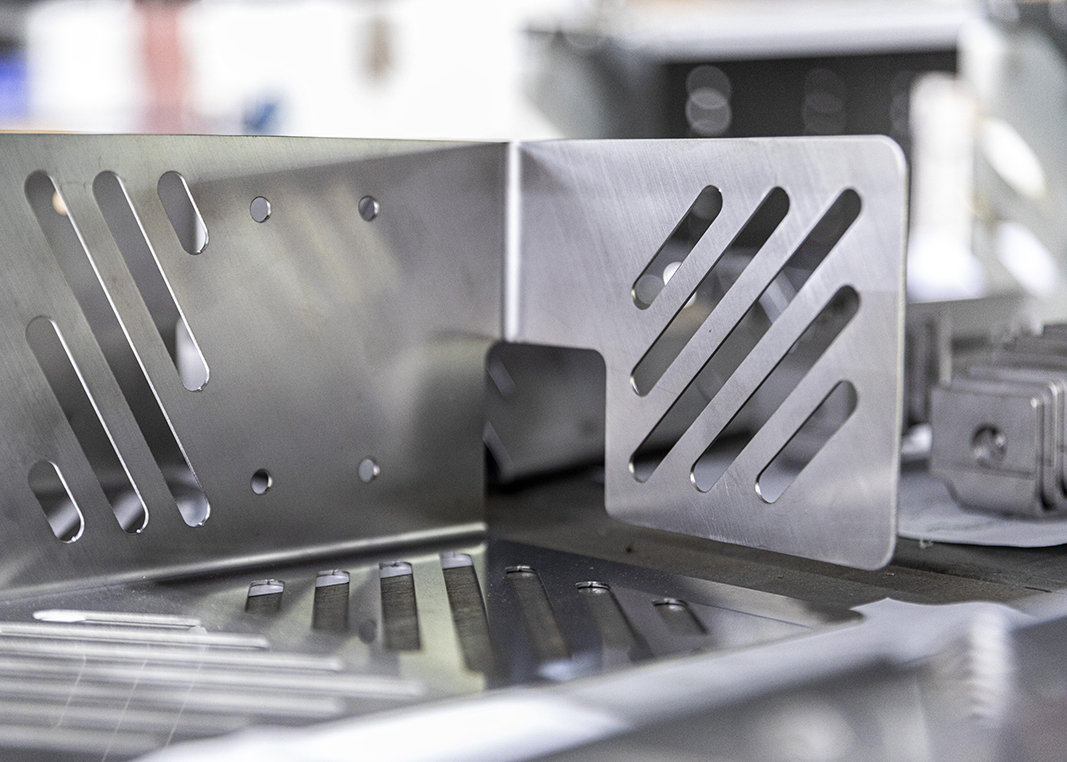
What is Ra Surface Finish?
It is the arithmetic average of the peaks and valleys found on a metal surface. When an engineer measures a surface, they use a device called a profilometer - a needle stylus that physically drags across the material. It is spring-loaded to fall into the microscopic peaks and valleys to calculate the average by measuring vertical displacements in millionths of an inch (micro-inches) or micrometers. The more consistent and shallow these peaks and valleys are, the lower the Ra value, and the easier the surface is to sanitize.
The Microscopic Battle: How Bacteria Hides in Surface Valleys
The reason Ra surface roughness is so heavily scrutinized is due to the size of the enemy. Bacteria such as Listeria monocytogenes are roughly 0.5 to 2.0 micrometers in size. If a conveyor surface is “rough” at a microscopic level, it provides the perfect “bunker” for these organisms to hide.
To a Listeria cell, a standard mill finish looks less like a smooth floor and more like the Grand Canyon. Once bacteria hunker down in there, they’re basically wearing a raincoat - your high-pressure sprays and sanitizers just slide right over the top of them.
Why 0.8 µm (32 µin) is the Industry Standard for Food Contact
For decades, 0.8 µm (32 µin) has been the benchmark for food safety. This standard is not arbitrary; research has shown that once a surface is polished to 32 Ra or smoother, the rate of bacterial attachment significantly drops, and the effectiveness of standard Clean-In-Place (CIP) protocols reaches its peak.
Getting food processing equipment with 3-A sanitary compliance almost always requires meeting the 32 Ra standard in all product-contact zones. At Nercon, we verify these values through rigorous quality control, ensuring that every weld is ground smooth and every surface is polished to meet or exceed these regulatory requirements before the equipment ever leaves our floor. We also guard the material’s integrity through every stage of fabrication. We utilize laser protective sheets and specialized foam pads on our carts and break presses to ensure the steel’s surface remains free of scratches or tool marks that could become microscopic bunkers for bacteria.
Comparing Finishing Methods: Mechanical vs. Electropolishing
Achieving a 32 Ra finish can be done through two primary methods, each offering different levels of protection.
- Mechanical Polishing. This involves using progressively finer abrasive belts or pads to physically grind down the metal’s peaks. This is the industry standard for most sanitary conveyors. It creates a directional grain that is smooth to the touch and meets the 32 Ra requirement.
While these polishing methods are common, top-tier sanitary levels often start with material selection rather than abrasive sanding. At Nercon, we physically choose specific grades of 12-gauge or quarter-inch steel that naturally meet the 32 Ra requirement through the way they are produced at the mill. By using no-polish material, we avoid the mechanical process of sanding a grain into the steel, which can inadvertently create deeper valleys and increase surface roughness.
- Electropolishing (EP). For high-risk products like raw proteins or dairy, electropolishing is often the preferred upgrade. Instead of grinding the metal, EP uses a chemical bath and an electrical current to dissolve the top layer of the steel. This removes the peaks faster than the valleys, resulting in a microscopically featureless, mirror-like finish that offers the ultimate level of microbial release.
To ensure consistent protection across the entire system, Nercon electropolishes welds even when the rest of the frame is not fully electropolished. This targeted treatment eliminates microscopic pits and crevices at the joints, ensuring every weld matches the 32 Ra smoothness of the main plates.
The Benefits of a Passivated Surface for Corrosion Resistance
Beyond smoothness, the finishing process is vital for passivation. Passivation is a chemical process that removes free iron from the surface of the stainless steel and enhances the protective chromium-oxide layer. Without a strong passive layer, even 316 stainless steel can develop rust spots or pits when exposed to harsh cleaning chemicals. High-quality finishing ensures that this protective skin is uniform across the entire machine, especially at the weld joints.
How Surface Finish Impacts Your Cleaning ROI (Reduced Downtime)
Sure, investing in a superior surface finish can help pass a safety audit, but it is also a strategic business decision that directly impacts your conveyor system’s Cleaning ROI.
When a surface is properly polished to a 32 Ra or better, the time required for washdown may be reduced.
- Faster Chemical Action. Sanitizers can reach 100% of the surface area instantly.
- Less Mechanical Scrubbing. Soil and proteins release from the metal with less effort.
- Water Savings. Reduced cleaning time translates to thousands of gallons of water saved over the life of the conveyor.
In a facility where time is money, cutting 20 minutes off a daily sanitation cycle can result in dozens of additional hours of production time over the course of a year.
Specifying the Right Finish for Your Next Conveyor Project
When ordering your next system, it is important to go beyond the word sanitary. Be specific about your needs:
- Define the Zone. Clearly identify Product Contact Zones versus Non-Contact Zones.
- Request Ra Certification. Ask your manufacturer for profilometer test results on critical surfaces. While a conveyor design cannot be pre-certified by an outside agency for every unique facility, Nercon follows strict 3-A and USDA guidelines to ensure the equipment can pass any sanitary audit, provided the facility’s sanitation crew follows the necessary cleaning protocols.
- Match Finish to Product. If you are moving sticky or high-acid products, consider the leap from mechanical polishing to electropolishing.
At the end of the day, the surface finish of your conveyor is the final line of defense for your brand. By understanding Ra values and insisting on precision-engineered surfaces, you are investing in a predictable, repeatable and safe manufacturing process. At Nercon, we take the microscopic battle seriously, engineering our finishes to ensure your facility stays compliant, efficient and, most importantly, safe for the consumer.
Nercon is a Wisconsin-based manufacturer of conveyor systems and material handling equipment. With 50 years of engineering experience, Nercon provides high-speed sanitary and industrial solutions, from standalone units to full-line integrations, for the food and beverage industries. All equipment is designed and fabricated in the USA, focusing on durability and ease of maintenance for high-volume production environments.

Request A Quote
Looking for a solution designed specifically for your needs? Share the details of your project with us, and our team will create a customized quote tailored to your goals, budget, and requirements.